
Part 2 — Omina Frustra
Caralis, 214 BC. The grind, a doomed win, and the omens that came to nothing.

Previously in Sardinia, Part 1
There was no time to be afraid. There was only the next order, and the one after that.
The elephants came on at his front first. His Marines and Velites, hastily conformed into a ragged line, did the only thing men can do against elephants; they made them more afraid than they were. They darted in and speared the beasts in the rump, flung rocks, screamed, anything, and the great animals wheeled and bolted off in every direction, trampling their own as they went. Manlius urged his horse forward with the legions, peeling off cohorts as he advanced on the left to brace against the Numidian penetration he knew was coming. His best centurions had the maniples wheeling into position, signifers and optios working in unison without being told.
Thank Mars for Roman discipline. When everything else fails, that remains.
He glanced back at the Triarii and was steadied by what he saw — old faces among them, mail shirts and crested helmets, men he had known in Gaul. Veteran determination written in the set of their shoulders. They had not run from worse than this.
With the elephants gone, the goat-skins and rebels on his right stood suddenly exposed. Will Antonius see it? His prefect had the maniples on that wing; a bold man would attack now, into the gap, and turn the day’s one piece of luck into something real.
It seemed Hostus had the same thought from the other side.
The rebel’s levies rushed the Roman line, seeking the advantage first. The leading Hastati met them in a vicious shoving match, scutum to shield, and for a moment the sheer ferocity of it stunned the front ranks. Then the decanus called the passage of lines, cool as a man on the drill field, and the relief came up through the gaps the way it was meant to. They broke contact, reformed, charged again, pila spent, the charge going in half-blunted, men holding ground by main strength while the cohorts behind them advanced.
And then Manlius saw Antonius’s standard fall.
Did the prefect meet his end?
He could not tell, and could not go to see. But his men fought on. The Principes rotated up and followed the attack, and he relaxed a fraction as a hail of light pila flew through the air into the lightly armed enemy. He could not see the close work from where he sat his horse, but he knew it by heart and let his mind walk it: the Principes closing at the trot — thirty-five metres, thirty — and at ten the second volley of heavy pila striking home with that deadly weight, and then every man drawing his gladius and bringing up his scutum, the whole line connecting with the enemy shields in one sickening crunch.
Hostus’s pennant wavered. The men around it wavered with it.
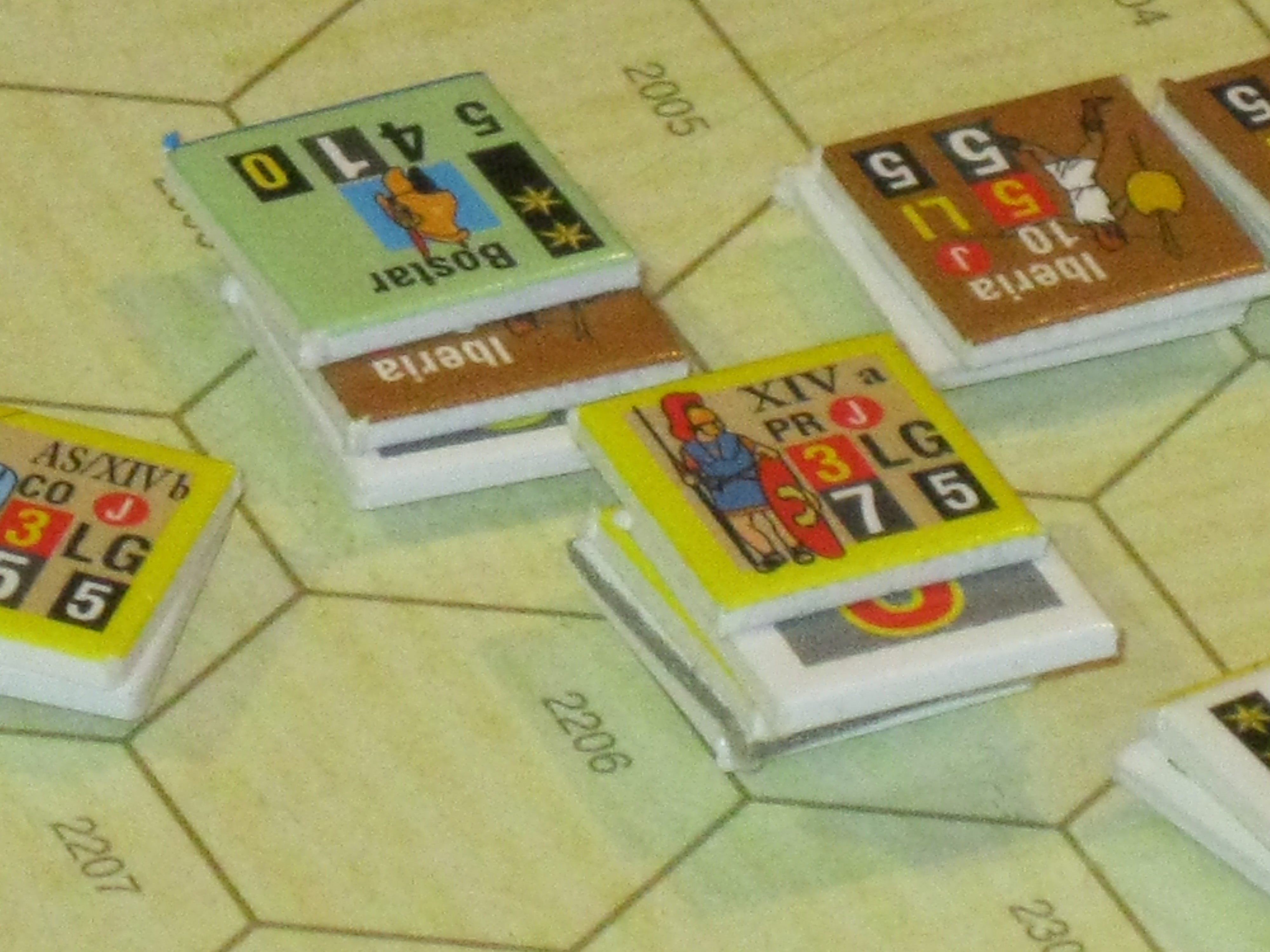
Hostus died on the field.
A win. A real one but with Antonius down, there was no one to seize it. Manlius could only hope an optio, a tesserarius, someone in the chain would take hold and exploit it before the moment closed. He had no attention to spare for the right anymore.
He had bigger problems on his left.
Mago’s cavalry were riding loose among the Velites and Hastati now, cutting them down at their leisure. His cohorts trying to hold the flank looked up to see a wave of dark African infantry bearing down on them through the dust the Numidian horse had thrown into the air. It was enough to unnerve any man. He watched them feel it — and watched them hold anyway.
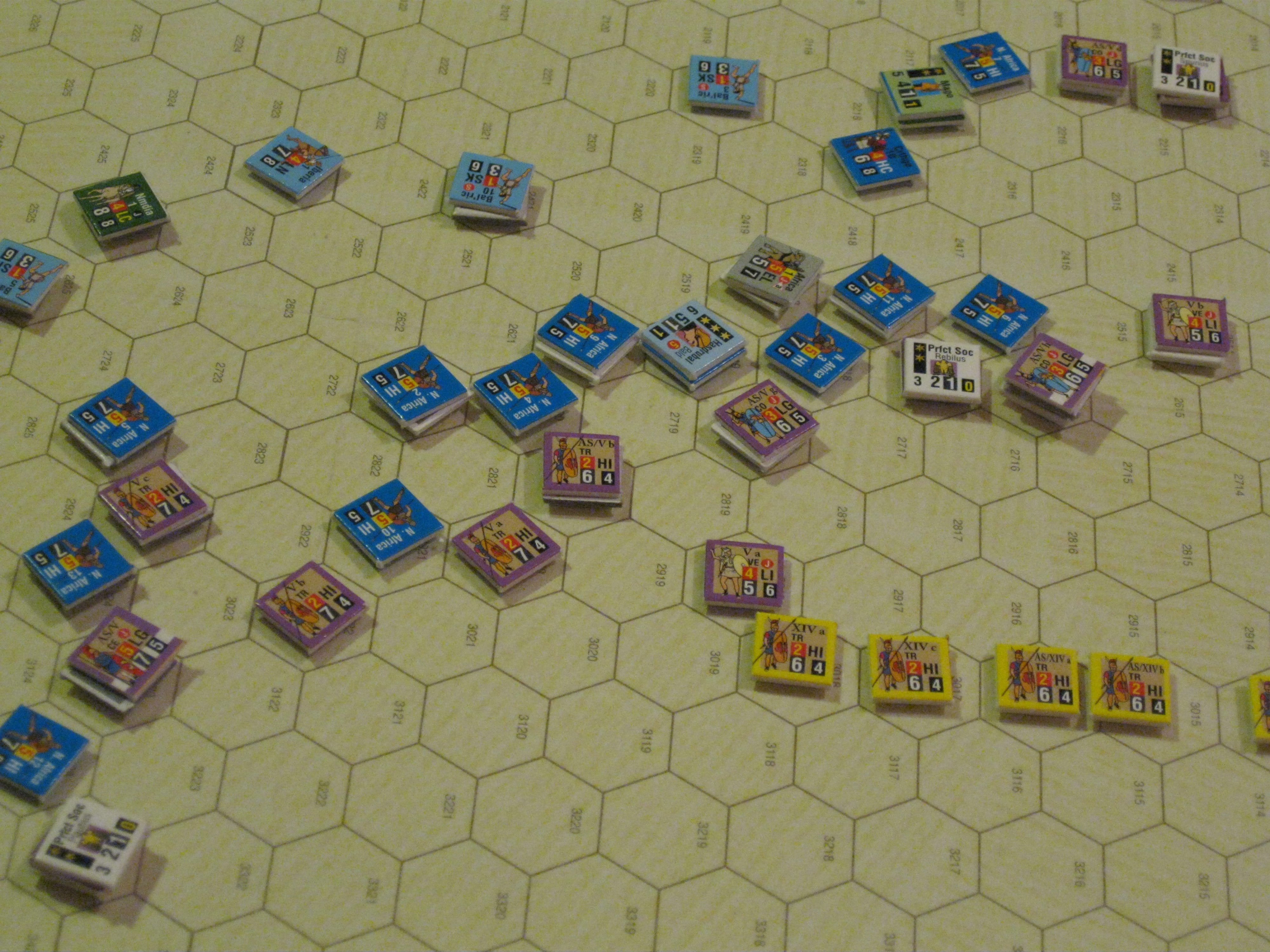
Plautius, the centurion of the Triarii, read it the same instant Manlius did and waved his veterans forward. If the old hands could pin the Africans in front, perhaps the battered Roman cavalry, what was left of it, could come around and take the purple robes from behind.
Hasdrubal read it too. His signaler called, and the Balearic slingers went to work, stones humming out to ward off and slow the distant Roman horse before it could ever arrive. Every move answered before it was finished. The enemy was simply faster than the day allowed Manlius to be.
He was at the side of the V Legion now, riding with them as they ground forward into the center of Hasdrubal’s Iberian line. The Iberians were giving way at last; his men were clearing the last of them. For one breath it almost looked like progress.
He turned to look back from the Iberians in front of him — and saw Mago and his lancers bearing straight down on him from the side.
He straightened his aching back on instinct, wheeled his horse, and sounded the warning as his men shook off the last of the enemy to his front.
He never saw the rest.
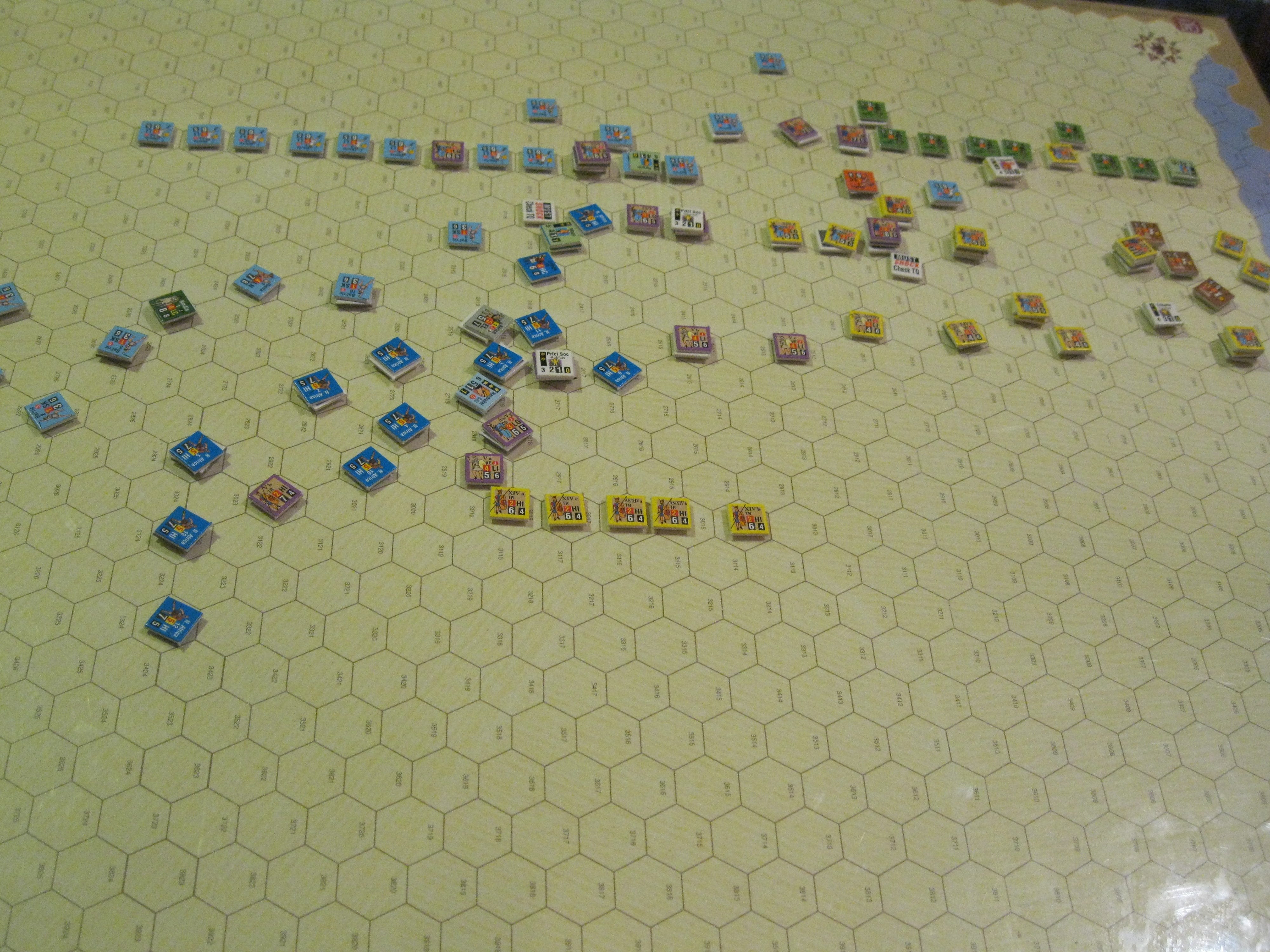
Deep behind him, in the gap his own advance had opened between himself and the Triarii, Hasdrubal signaled the charge. The African heavy infantry surged through it, into the soft Roman center from inside the line, and the nearest maniples around Manlius were simply swept away. The men drove their advantage home, and as Roman cohorts began to rout in front of them it raised the blood of every Carthaginian on the field. A line that breaks from the rear does not stop breaking, it implodes violently. The Trarii, fought bravely in a hasty retreat, as teh less seasoned raced past them.
He had fought blind, and the blindness had killed him not his courage, not his discipline, not the valor of the V.
Only that he could never see the second jaw until it had already closed.
In the dark, after the sounds of battle had subsided, a tall and noble but weary looking Roman walked slowly over the rise before the rocky shore, and stopped to look one last time back upon his last battlefield.
Caralis.
“Omina frustra,” he murmured. The omens, for nothing.
The Battle for Sardinia was lost.
This is the 8th battle of the Second Punic War campaign. (Battle 7 was a naval conflict.) So far Carthage leads, 7–0. As you read this, Nero is flanking Hannibal at the 3rd Battle of Nol